
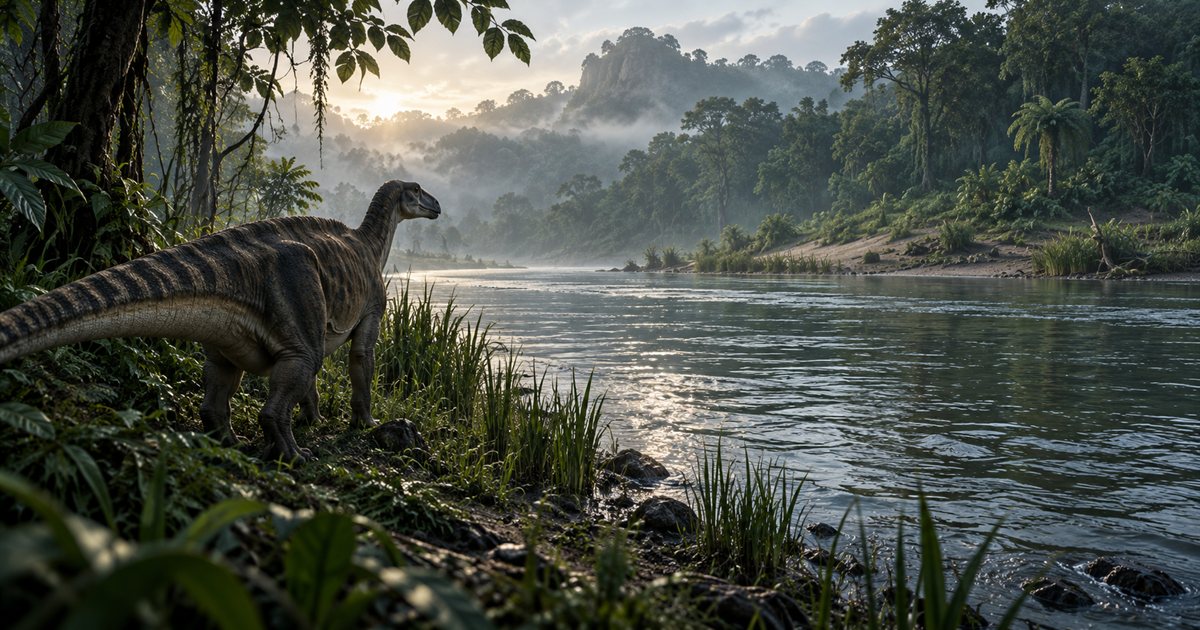
A river crossing has three parts: getting in, reaching a usable bank and leaving the shoreline. Do not judge it only by the distance to the other side. Check the approach, your current condition and where you can go after landing before you commit to the water.
This is a practical planning guide for Gateway, not a list of guaranteed safe crossing coordinates. Its three AI-generated illustrations show fictional terrain and decision points. They are not screenshots, verified depths or an exact map of a current river.
Start with the reason for crossing
Ask what you need on the other side. Are you moving toward food, meeting a companion or leaving an encounter? A clear purpose helps you compare the crossing with staying on your current bank. A destination marker is a direction to evaluate, not an instruction to travel in a straight line.
Separate the immediate need from the long journey. If you only need drinking access, you may not need to cross at all. If you are trying to reach a distant region, moving along the bank first can give you a better view of the terrain and more options. Our drinking-water guide covers approaching water for that different purpose.
Decide how much uncertainty you can tolerate before getting close. A healthy animal travelling without urgency can choose to wait and scout. An injured animal may need a shorter, less demanding plan. Neither situation makes the nearest crossing automatically the right one.
Inspect the entry, landing and landward exit
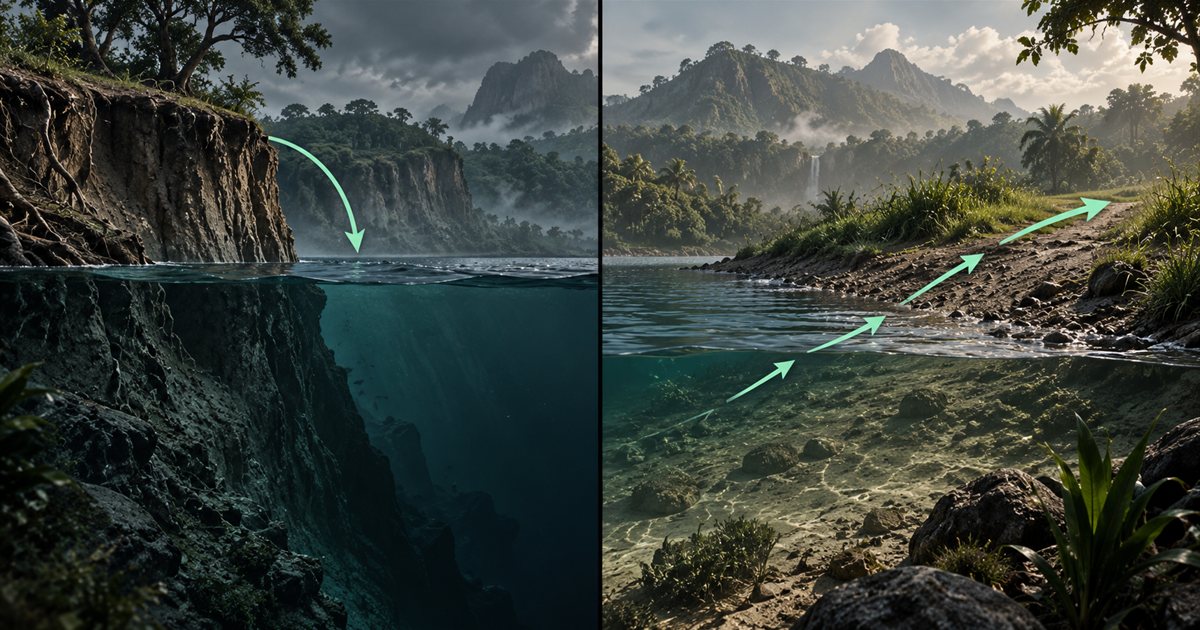
Stand back far enough to see the shape of the bank. Look for an abrupt drop, an overhang or a narrow approach that gives you little room to change direction. Then inspect the opposite side. Reaching the shore is not enough if a steep edge prevents you from getting onto land.
Identify the exact place you intend to leave the water and the ground beyond it. Look for an open route that you can assess rather than a landing that immediately funnels you between rocks, dense vegetation or another stretch of water. An apparently easy entry can lead to a poor exit.
| Part of the crossing | Question to answer | Reason to reconsider |
|---|---|---|
| Entry bank | Can I approach without an uncontrolled drop? | A steep edge or obstructed footing |
| Opposite bank | Where will I get out? | A ledge with no visible climb-out route |
| After landing | Where can I move next? | A narrow dead end or another immediate crossing |
Use the view you actually have. Water colour, reflections and vegetation can obscure depth and bank shape. If you cannot establish an exit, recognise that missing information before entering. The shape drawn on a map cannot replace inspecting the current terrain.
Check stamina and the animal you are playing
Read your current condition before planning a swim. A sprint to the shoreline can leave you with fewer options than you expected. Consider the approach, time in water and departure together rather than spending your available movement on only the first part.
Swimming behaviour, ability costs and recovery depend on the playable and game version. The official Deinosuchus and oxygen-system introduction explains that underwater exposure and swimming resources matter, but those historical notes are not a current universal crossing formula. Check the live game's indicators and learn your animal's movement in a manageable situation.
A land-focused playable should not borrow a route from an aquatic animal simply because the same river appears in both videos. Growth, injury and the current game state also matter. If you are already recovering, use the injury guide to assess your condition before adding another demanding movement decision.
Do not learn a critical water control for the first time in the middle of a long crossing. Review your current bindings and understand what the game's visible feedback means. This guide deliberately avoids fixed stamina percentages or a claim that every species can cover the same distance.
Look and listen before closing the distance
Pause on ground you have inspected. Watch the near bank, opposite bank and nearby cover. Listen for repeated movement or calls and compare them with what you can see. One quiet moment is useful information, but it does not establish that the whole river is empty.
Deinosuchus makes water-side awareness especially relevant. Read our Deinosuchus guide for its own movement and hunting context. You do not need to identify every possible animal before making a decision; you do need to avoid treating a lack of visible movement as confirmation of safety.
Keep room to step away while you observe. Standing at the edge for a long debate can turn planning into exposure. If the view is poor or nearby activity increases, move back to a place where you can reassess the approach.
Compare a crossing with a land detour
A longer route on land may be easier to inspect than a shorter route through water. Compare the terrain and your current supplies rather than counting only the apparent distance. Following the bank can reveal another approach, but it also takes time and may pass through more activity.
Look for options you can actually reach and inspect. A bridge, narrow section or shallow-looking area is a candidate for assessment, not a guarantee. The landing may still be awkward, the approach may be busy, or the route after it may not lead where you intended.
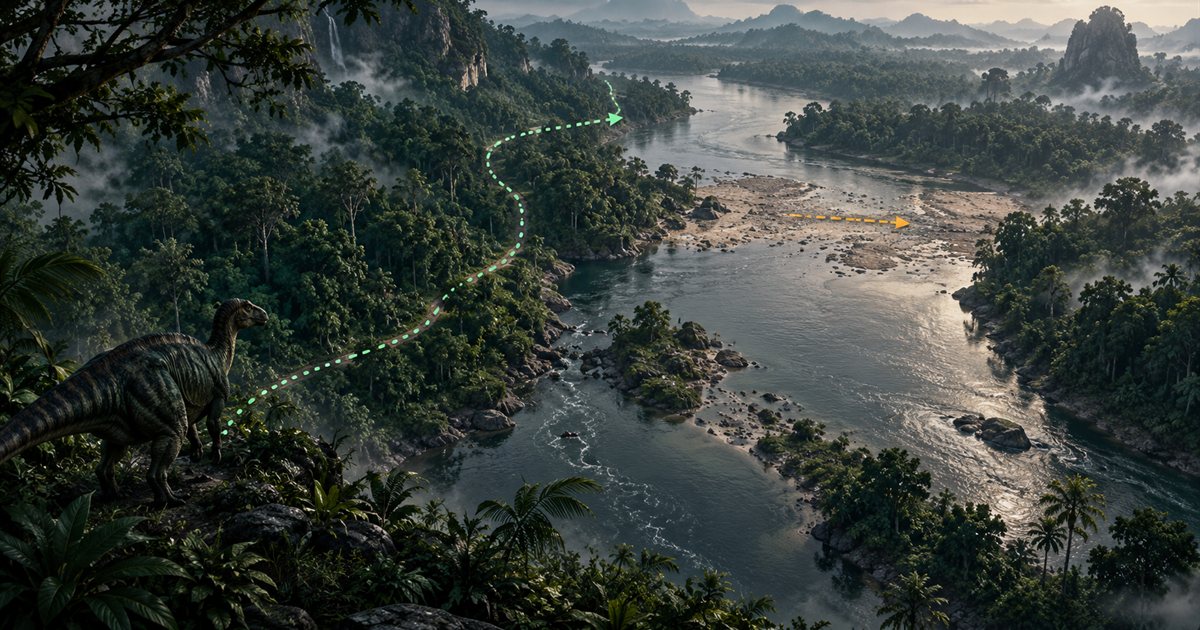
If you have found only uncertain choices, staying on your bank is still a decision. You can change the destination, wait for a companion to describe the other side or continue gathering information. Crossing is not mandatory just because your original plan pointed across the river.
Choose your exit before entering
Once you decide to cross, keep the intended landing in mind. Avoid beginning with a vague plan to work it out later. Use the game's current swimming controls and condition indicators, and keep assessing whether the chosen exit remains usable as your view changes.
A straight line is not helpful if it ends against a bank you cannot leave. Equally, repeated changes of direction can lengthen the time you spend in water. Balance those considerations using the actual terrain rather than treating either a direct crossing or a diagonal route as a universal rule.
If something unexpected happens, prioritise a reachable exit and the controls available to your animal. Do not stop to operate the minimap in the middle of a developing encounter. The app can help with planning before movement; it does not steer, swim or choose an emergency response for you.
Crossing with companions: agree on the same landing
Describe the intended exit using a visible bank feature, not only a compass direction. Confirm that everyone understands where the group expects to emerge and where it will continue on land. Players with different sizes or conditions may need to reassess the route individually.
Keep communication brief near the shoreline. If one person is still checking the far bank, say so before others enter. Do not assume a companion who reached the opposite side has inspected your exact entry or can guarantee the passage for everyone else.
After the crossing, regroup away from the immediate water edge when the terrain permits. A shared app squad can help you describe general positions, but those markers are the latest reported updates rather than live guarantees about anyone's swimming state.
After landing, finish the movement decision
Getting onto the bank is the start of your departure, not a reason to stop immediately at the edge. Inspect the next few steps, move onto ground you can understand and reassess your condition. Look at the route ahead before restarting a long sprint.
If your original destination is still useful, continue with a fresh observation of the area. If the crossing changed your condition or revealed unexpected activity, adjust the journey. Successful arrival does not oblige you to keep following an old plan.
How TheIsleMinimap helps with crossing plans
Use Gateway map references, location names, roads and trails to compare the general direction of alternatives. Update your position from visible Asset Location coordinates or approved local reading before using it as a planning reference. The layer directory explains the available reference layers.
Treat water markers as geography. Inspect depth, approaches and exits in-game before crossing.
River crossing questions
Is the shortest crossing always best?
No. Compare the entry, exit and departure route as well as distance.
Can another dinosaur's route prove mine is manageable?
No. Use your own animal, condition, controls and view of the terrain.
Should I cross just to follow a destination pin?
Only after assessing the route. A pin supplies a destination, not a passable path.