
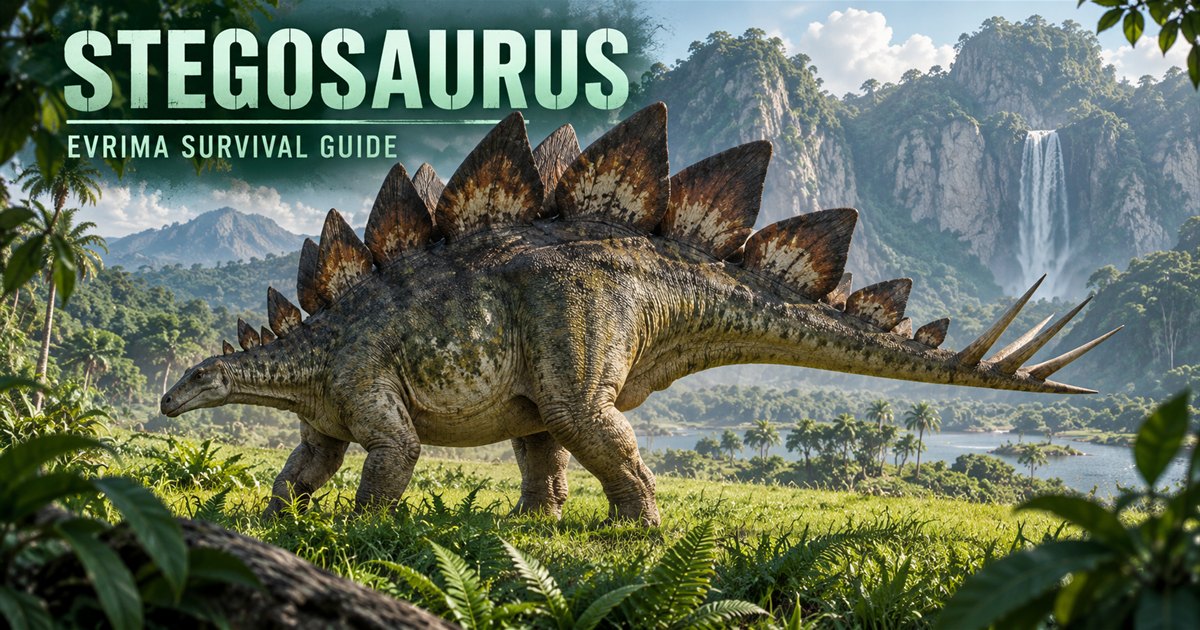
Playing Stegosaurus in The Isle EVRIMA? A powerful tail is only part of the job. You also need room to use it, food and water within a practical journey, and a herd that does not leave its youngest member behind.
This Stego guide covers tail attack controls, diet, juvenile growth decisions and Gateway travel. It is for EVRIMA, not Legacy. Check your current Controls menu, Status Report and server rules. The four AI-generated illustrations are conceptual teaching scenes, not official screenshots, exact hitboxes or accurate Gateway geography.
Stegosaurus controls: ordinary inputs and power swings
The developers' 2024 power-swing explanation describes holding RMB to prepare the tail and using LMB to execute the attack, with camera direction and nearby obstacles affecting the action. This is a design explanation, not a current damage table. June 2025 released patch notes include a power-swing hit-location correction, showing why old combat demonstrations need version context.
The fan-made Evrima Quick Guide carries an updating notice. Compare its default-input reference with your current bindings rather than assuming every older video uses your setup:
- LMB: ordinary bite input
- Alt + LMB: directional tail-swing input in the community reference
- Hold RMB: prepare the power-swing action; the developer explanation uses LMB to execute it
Practise away from other players. Try an ordinary input, then its alternate input, and watch the actual movement before combining it with camera turns. A missed attack does not always mean the control failed: facing, terrain, target movement and available space are separate parts of the situation.
Do not turn a control guide into a promise that one swing defeats a particular dinosaur. This article deliberately avoids fixed damage numbers, cooldowns, exact reach and guaranteed matchups. Use feedback from your current game and stop practising if another player enters the area.
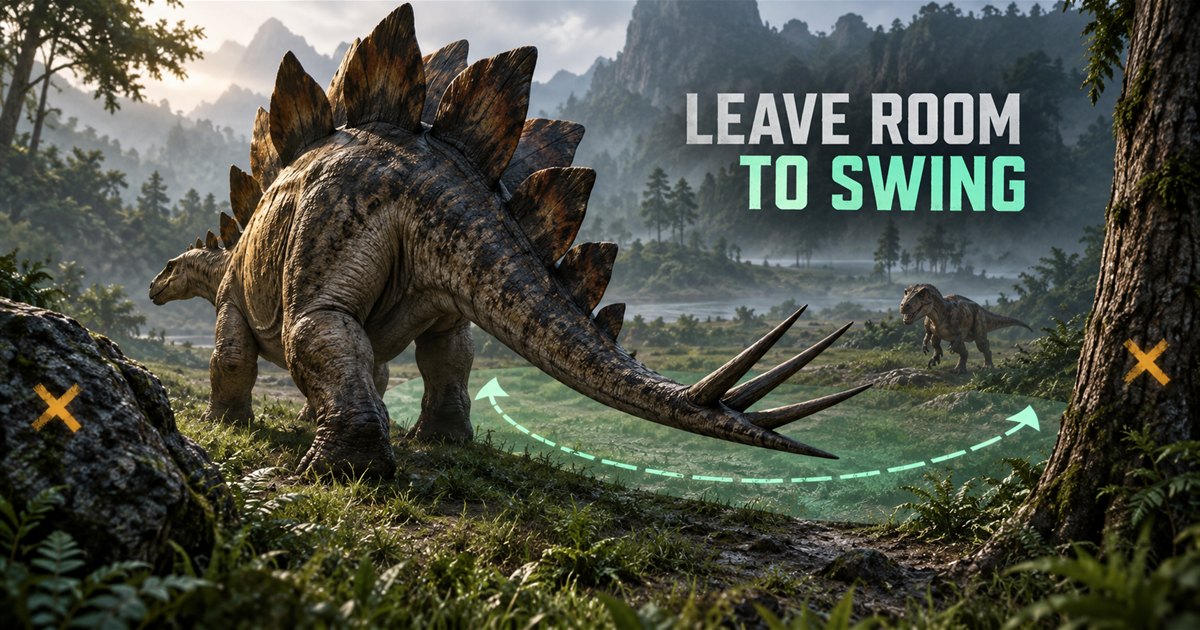
Leave room for the Stego tail
Inspect the ground before settling into a defensive position. Look for rocks, trunks, steep banks and narrow gaps around your rear and sides. A spot with excellent cover for your head can still leave poor room for your tail or for turning away.
Facing is a decision, not a one-time setup. Watch where the approaching animal moves and check whether turning will put your tail toward a tree or your body toward a drop. Avoid committing to repeated swings without reassessing the space around you.
Think about the next step as well as the current one. If you stop beside an obstacle, which direction can you move when the situation changes? A place that looks protected from one angle may become awkward when a second animal approaches from another side.
Small targets and uneven ground deserve particular care. Do not assume the animation, a distant camera angle or a conceptual attack arc tells you precisely where a hit will register. Practise your inputs on suitable open ground, then judge the actual encounter in the game.
If you have room to leave, weigh that option before starting a fight. Holding a location is not always worth the condition it costs. Follow the server's combat and grouping rules, and do not treat size as immunity to injury or a license to ignore other players.
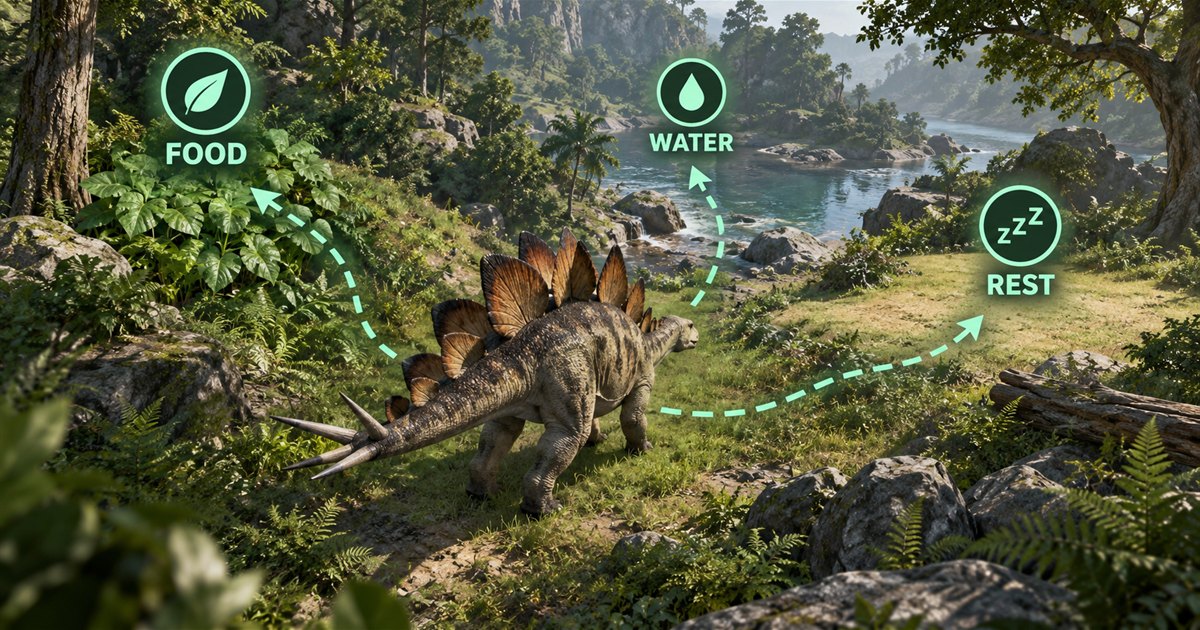
Stegosaurus diet: plan food, water and a rest stop
Check preferred foods and nutrient needs in your current Status Report. An older Stegosaurus food list can be a starting point for a question, but it should not override what your current animal and build display.
Choose a resource trip with more than one need in mind. Find a suitable food reference, inspect a possible water approach and identify a place to pause afterward. That is more useful than following a distant food marker while ignoring thirst and your return journey.
A mapped location is a navigation reference, not proof that the food is presently there or that the approach is safe. Inspect what is actually growing and check the surroundings before spending time feeding. Other players can arrive while your attention is on a resource.
At water, evaluate the bank and the exit separately. A quiet surface does not rule out a submerged predator. Avoid choosing a drinking point simply because it is the shortest line on a top-down map; the playable approach and the ground beyond the bank matter.
Use our food and diet guide for nutrient planning and water guide for approach decisions. The stamina guide covers keeping a travel reserve without relying on a fixed sprint distance.
Juvenile Stegosaurus survival: do not copy adult confidence
Start with a manageable local circuit rather than an ambitious crossing. Learn a feeding reference, a water approach and a familiar place to regroup. Keeping the first journey understandable gives you fewer decisions to improvise when something interrupts it.
Your life stage and current condition matter. An adult defending a clearing in a video is not evidence that a young Stego can stand in the same place and trade attacks. Use cover and group communication without assuming either will guarantee safety.
Ask companions to pause before they move out of sight. A herd that keeps walking while its juvenile feeds can quickly create a difficult reunion. Agree on a waiting landmark and say when you need a resource stop rather than trying to catch up silently.
Do not plan your session around a permanent growth-time number. Diet, conditions, server settings and game changes can affect the experience. The practical priority is meeting your current needs and reaching the next stage without unnecessary detours.
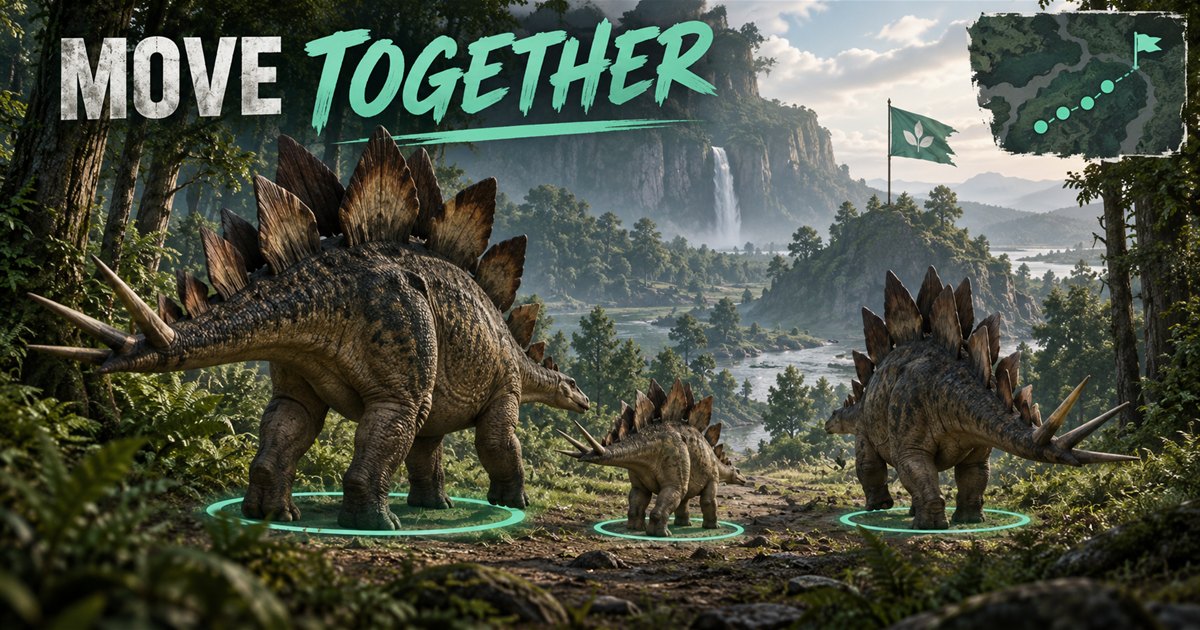
Stegosaurus herd positioning: move together without crowding
Agree on a destination before leaving. Use an identifiable landmark, a shared meeting point or a clear description of the next stop. Saying only that you are heading toward water can mean different banks to different players.
Leave enough room around companions for movement and tail actions. Several large animals squeezed into a narrow gap can have fewer options than a group with some spacing. Check the slowest or youngest member before continuing through a difficult section.
Before a river approach or terrain change, regroup on ground you can inspect. Decide whether everyone is ready, identify an alternative and be willing to choose another route. An extra planning pause is preferable to discovering halfway through that someone needs to stop.
Using a Gateway map with Stegosaurus
TheIsleMinimap's map layers help relate your latest position to mapped landmarks and resources. Inspect slopes, obstacles, food availability and other animals in the game; a map cannot confirm those conditions for you.
Copy Asset Location to update your marker, or use the enabled screen reader with your confirmed reading area while Lat and Long are visible. The marker shows the latest accepted reading, not uninterrupted tracking when the panel is hidden. See our coordinates and location guide for setup.
Private app squads support up to four players and shared latest positions. That app limit is not The Isle's in-game herd limit. Solo Lifetime provides local navigation; Squad plans include online squad features. Check the current plans for available options.
Stegosaurus questions: controls, diet and travel
How do you use the Stegosaurus tail attack?
Check your current bindings and practise the ordinary and alternate inputs separately. The community reference lists Alt + LMB for a directional swing; the developer power-swing explanation uses held RMB followed by LMB.
Why does a Stego swing miss?
Check facing, obstacles, terrain and target movement rather than assuming every miss is a broken key. This guide does not provide an exact hitbox or promise a hit on every small target.
What does Stegosaurus eat in EVRIMA?
Use preferred foods and nutrients in your current Status Report. Plan a practical food and water trip instead of treating a historical food list as permanently correct.
Can a juvenile Stego defend itself like an adult?
Do not copy adult matchups without considering your life stage and condition. Keep journeys manageable, communicate with companions and avoid unnecessary fights.