

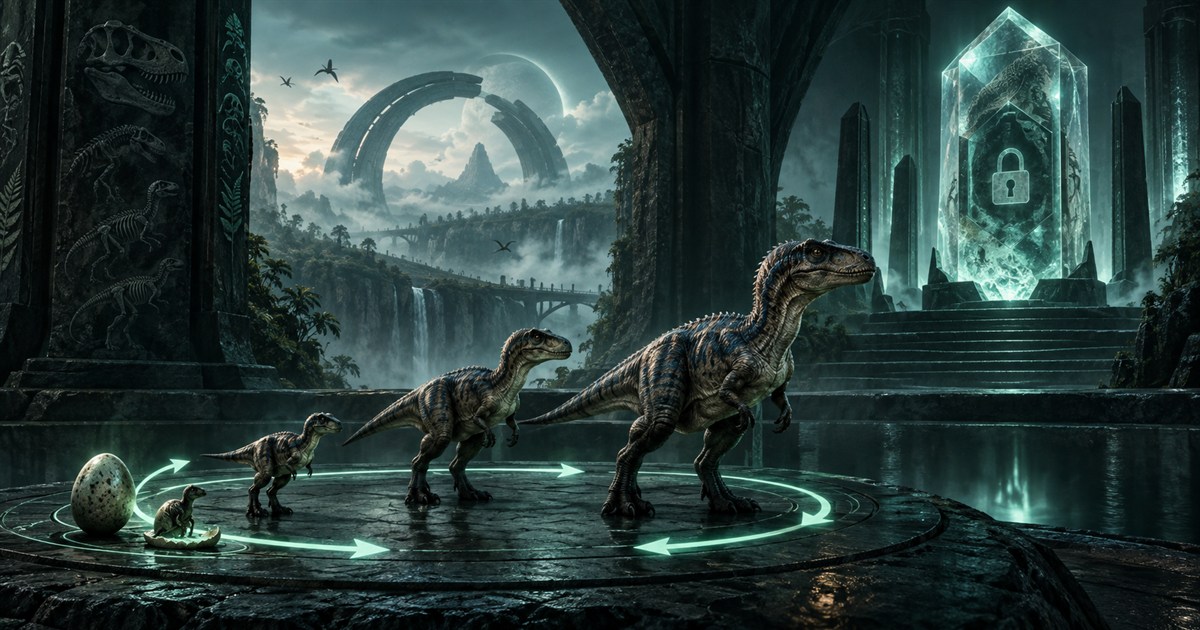
The Elder system extends a dinosaur's life beyond the normal growth journey in The Isle: EVRIMA. A successful Prime route can lead to the stronger Prime Elder path, while a dinosaur that does not qualify follows the weaker path commonly called Frail Elder. At the end of the lifecycle, Entombing voluntarily ends the current animal and begins another generation of the same species with inherited, enhanced mutations.
Plan Prime early. Current community documentation commonly describes qualifying through a selection of diet, sanctuary, migration, patrol, nesting and clean-lifecycle objectives before the later growth threshold. Check your current in-game state because requirements and balance can change. At 100% growth, the official EVRIMA patch notes confirm that Entombing can restart the same species as a fresh spawn while retaining and enhancing mutations and allowing more choices.
What is the Elder system in The Isle EVRIMA?
The Elder system is an endgame lifecycle rather than a separate dinosaur selected from the spawn screen. Your current animal grows through its normal stages, and the path it followed during that life influences whether its later stage becomes Prime or the weaker non-Prime route often called Frail.
Prime is not simply “survive until the bar is full.” It rewards a broader life that interacts with multiple game systems. Diet, objectives, travel and reproduction can all matter. The precise stat curves, thresholds and species exceptions remain balance-sensitive, so the current game build and server are authoritative.
Three terms are useful:
- Prime: a qualifying status earned by completing enough applicable lifecycle conditions.
- Prime Elder: the stronger Elder path for a dinosaur that qualified for Prime.
- Frail Elder: the commonly used name for the weaker aging path when Prime qualification was not secured.
Do not assume every species follows an identical curve. Size, growth speed, fertility windows and current balancing can change how practical each objective is.
Prime Elder versus Frail Elder
A Prime dinosaur receives the more favorable version of the later lifecycle and an additional mutation opportunity. A Frail dinosaur still reaches the Elder lifecycle but does not receive the same peak. Community testing describes Prime as a temporary high point followed by aging rather than a permanent maximum-power state.
That distinction matters for planning. Waiting until the final growth stage to think about Prime is usually too late. Several commonly reported conditions depend on being juvenile, maintaining a clean lifecycle or completing travel before the later-growth eligibility point.
The safest rule is simple: finish more applicable conditions than the minimum you think you need. Objectives can fail to count, differ by species or change between builds. Never risk an entire life on one uncertain task.
What are the Prime Elder requirements?
Current community guides commonly document a pool of ten possible Prime conditions, with most dinosaurs needing five and some smaller species reported to need fewer. This is community-observed information—not an unchangeable promise from the developers. Confirm the current build, your species and any community-server adjustments.
The commonly reported condition pool includes:
- Visit a Sanctuary while juvenile.
- Be nested into the world rather than using a normal fresh spawn.
- Reach the game's Perfect Diet state with the required nutrient combination.
- Participate in the larger migration objective when that objective exists and is active.
- Visit multiple migration zones during the life.
- Complete multiple patrol-zone visits.
- Avoid becoming infertile during the qualifying period.
- Avoid the harmful muscle-spasm state.
- Raise offspring to the required later stage.
- Play a species that receives a reported species-specific condition.
Some conditions are passive safeguards, while others require deliberate travel. The game does not necessarily present this as a clear public checklist, and community guides disagree on edge cases. Treat a successful in-game Prime indication—not a third-party list—as the final confirmation.
When must Prime objectives be completed?
Current community documentation commonly places the important eligibility cutoff around the later-growth transition, often described as 75% in the reworked lifecycle. Patches have fixed unintended Prime behavior around this stage, which is another reason not to delay. Complete the route early and use the current mutation interface or other current in-game indication to confirm the result.
Plan a practical Prime route on Gateway
A good Prime attempt turns several objectives into one route instead of making repeated emergency crossings. Start with the juvenile-only condition, maintain diet, then connect migration and patrol regions while keeping water, cover and a fallback food area available.
- Juvenile start: capture Asset Location, identify the nearest relevant Sanctuary and check whether reaching it is realistic.
- Diet: use the current diet display and relevant food layers to pursue Perfect Diet without abandoning water or cover.
- Migration: follow only the objective currently shown by the game; do not assume every mapped region is active.
- Patrols: connect smaller objectives to the main route rather than crossing Gateway only to chase an isolated marker.
- Nesting: if reproduction is part of the plan, choose a defensible site and begin before the species-specific fertility window closes.
- Safety margin: complete an extra applicable condition when possible instead of relying on the exact minimum.
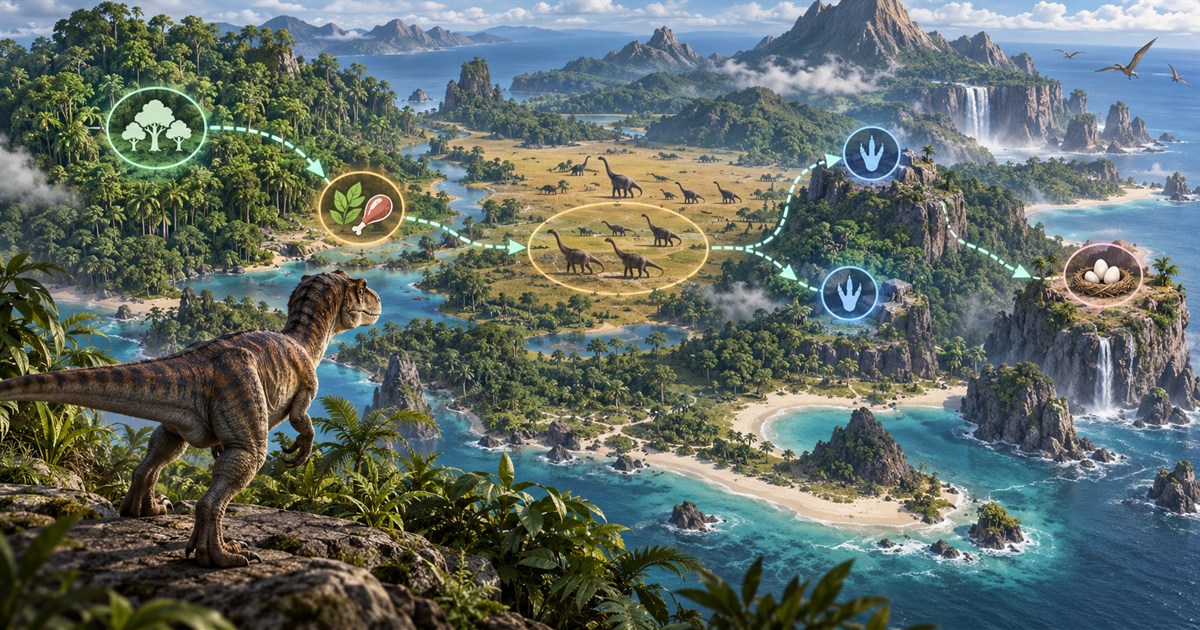
TheIsleMinimap can provide geographic context for migration, patrol and sanctuary zones, but the current game decides which objective applies to your dinosaur. Refresh Asset Location coordinates after detours and major crossings so the route does not drift.
Diet, fertility and nesting during a Prime attempt
Perfect Diet is commonly reported as one of the Prime conditions, but diet also supports the journey itself. Check the live in-game nutrient state instead of following an old fixed food chart. Select only the plant or animal reference layers relevant to the current species, then keep drinking water within reach. The food and diet guide explains that route in more detail.
Fertility and nesting create two different planning problems. Remaining fertile can be a passive condition, while being nested in or raising young requires coordination with other players and the current reproduction rules. Species and patches can create exceptions, especially for faster-growing animals, so check the current in-game state before committing to a long nesting setup.
A nest location should have:
- food and water reachable without long exposed trips;
- more than one exit route;
- cover that does not trap the parents against cliffs or deep water;
- a recognizable nearby landmark for returning squad members;
- enough time remaining in the parents' useful lifecycle window.
How do you know whether you achieved Prime?
The current game interface is the authority. Community guides often recommend checking whether the additional mutation opportunity becomes available at the later-growth transition. If it remains unavailable, players generally interpret that as the Frail path. Interface behavior can change, so avoid relying on one old screenshot or an exact visual from a previous patch.
If Prime does not appear:
- do not assume every zone visit counted;
- consider whether a condition required a different growth stage;
- check whether infertility or another harmful state invalidated a passive condition;
- confirm that the server has not changed growth or progression behavior;
- complete more conditions on the next life rather than repeating the same minimum route.
Check Prime progress in the game’s Status Report; use the map for the geography around your next objective.
What does Entombing do in The Isle?
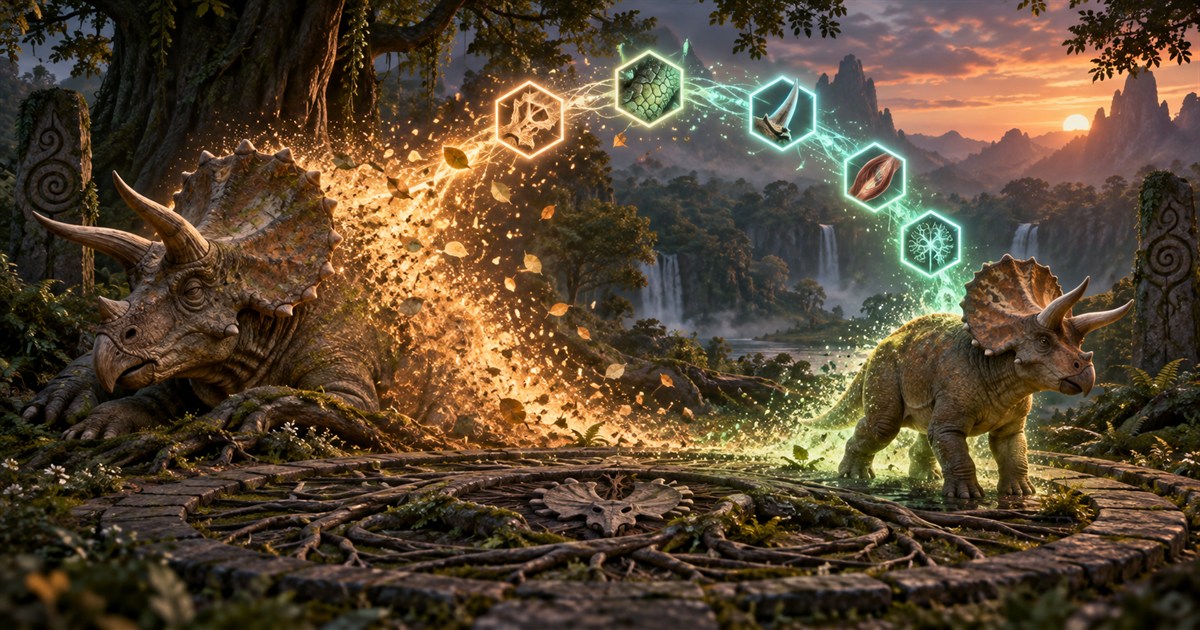
Official Patch 0.21.321 introduced the Elder life stage and states that at 100% growth players become eligible to Entomb. Entombing intentionally kills the current animal and respawns the player as a fresh spawn of the same species. Mutations from the previous life are retained, their benefits are enhanced and the new life can choose additional mutations.
Entombing is therefore a deliberate progression decision, not a normal logout and not a way to keep the current adult alive. Before confirming it:
- finish anything you still want to do with the current Elder;
- expect to return to an early vulnerable growth stage;
- plan food, water and cover for the new generation;
- understand the current mutation choices and server behavior;
- treat the confirmation as irreversible for the active animal.
Do you keep mutations after Entombing?
Yes. Mutation retention and enhancement are explicitly described by the official release notes. Community testing also discusses practical mutation limits and how enhancement behaves across repeated generations, but those exact values are balance-sensitive. Use the current mutation screen and patch notes instead of treating an old maximum or multiplier as permanent.
Entombing is not the same as Entombed Saves
Ordinary Entombing is already part of the lifecycle. Entombed Saves are a separate announced feature intended to let a player preserve a successfully entombed lineage while switching to another species. As of 1 October 2026, official DevBlog #72 described Entombed Saves as integrated into the master branch and undergoing QA before an initial HordeTest appearance.
That does not mean Entombed Saves are available on the normal EVRIMA public branch. Do not promise a save slot or plan a live-server action around the feature until the relevant branch's current patch notes say it has arrived.
Common Prime Elder and Entombing mistakes
- Starting too late: juvenile-only or pre-threshold conditions are left until the dinosaur is already near Elder.
- Trusting a fixed checklist blindly: a species exception, server setting or patch changes the practical route.
- Assuming map zones are always active: the layer is treated as a live objective instead of geographic context.
- Ignoring diet and fertility: passive conditions are lost while the player focuses only on travel.
- Relying on the exact minimum: one uncounted objective sends the dinosaur down the Frail path.
- Entombing without preparation: the player forgets that the next generation begins vulnerable again.
- Confusing planned features with live features: Entombed Saves are assumed to exist on the public branch before release.
The Isle EVRIMA Prime Elder FAQ
How do you become Prime Elder in The Isle?
Complete enough applicable Prime conditions before the current eligibility cutoff, survive into the Elder lifecycle and verify Prime through the current in-game interface. Community guides commonly describe diet, sanctuary, migration, patrol, nesting and clean-lifecycle conditions.
What is a Frail Elder?
Frail Elder is the commonly used term for the weaker Elder path when the dinosaur did not qualify for Prime. Exact stat behavior differs by species and balance patch.
How many Prime objectives do I need?
Current community documentation commonly reports five from a pool of ten for most species, with some smaller dinosaurs reported to need fewer. Treat this as patch-sensitive and verify the current species and server.
What happens when you Entomb?
The current animal dies intentionally, and you return as a fresh spawn of the same species. Official patch notes state that previous mutations are retained and enhanced and that additional mutations can be selected.
Do you need to be Prime Elder to Entomb?
The official release note says players at 100% growth are eligible to Entomb; it does not state in that summary that Prime is required. Use the current game's available action and server rules as the authority.
Are Entombed Saves available now?
As of 1 October 2026, they were described in official development news as undergoing QA before HordeTest, not as a normal public-branch feature. Check newer official patch notes before relying on them.
Can TheIsleMinimap track Prime objectives?
No. It helps plan routes between position, zone, food, water and landmark references. It does not read hidden progression, mutations or private game state.
Keep your latest Asset Location beside focused sanctuary, migration, patrol, food, water and landmark layers.