
Playing Triceratops in The Isle EVRIMA? A strong defensive plan begins before the first attack: leave yourself room to turn, know where your herd is moving and avoid reaching food or water with no comfortable way out. Horns do not make every position a good one.
This Trike guide covers EVRIMA controls, diet, juvenile survival and navigation on Gateway. It is not a Legacy combat tutorial or a promise of invulnerability. The four AI-generated illustrations are conceptual teaching scenes, not official screenshots, exact hitboxes or a real Gateway map.
Triceratops controls: flip, thrash and sparring
The official patch 0.20.109 notes added Triceratops to public EVRIMA. They describe held LMB for the ceratopsian flip in spar mode and double-tapped LMB for thrash, including during sparring. They also note that thrash blocks movement during the attack.
- Hold LMB: the flip input described in the released ceratopsian notes
- Double-tap LMB: thrash; distinguish it from one click or a long hold
- Sparring: check your current controls and prompts for entering, manoeuvring and leaving the stance
Practise those input distinctions away from a crowded herd. An accidental double click can ask for a different action from the one you intended. Watch how your movement changes during the animation, and leave enough empty ground to understand the result.
Do not import a Legacy Trike control list into EVRIMA. If a video shows a different attack sequence, compare its branch and recording date with your current game. Your own bindings take priority over any default-input illustration or guide.
This article does not give a universal knockdown threshold, damage multiplier or guaranteed sparring result. Relative size, condition and balance changes make those promises a poor basis for deciding whether to fight.
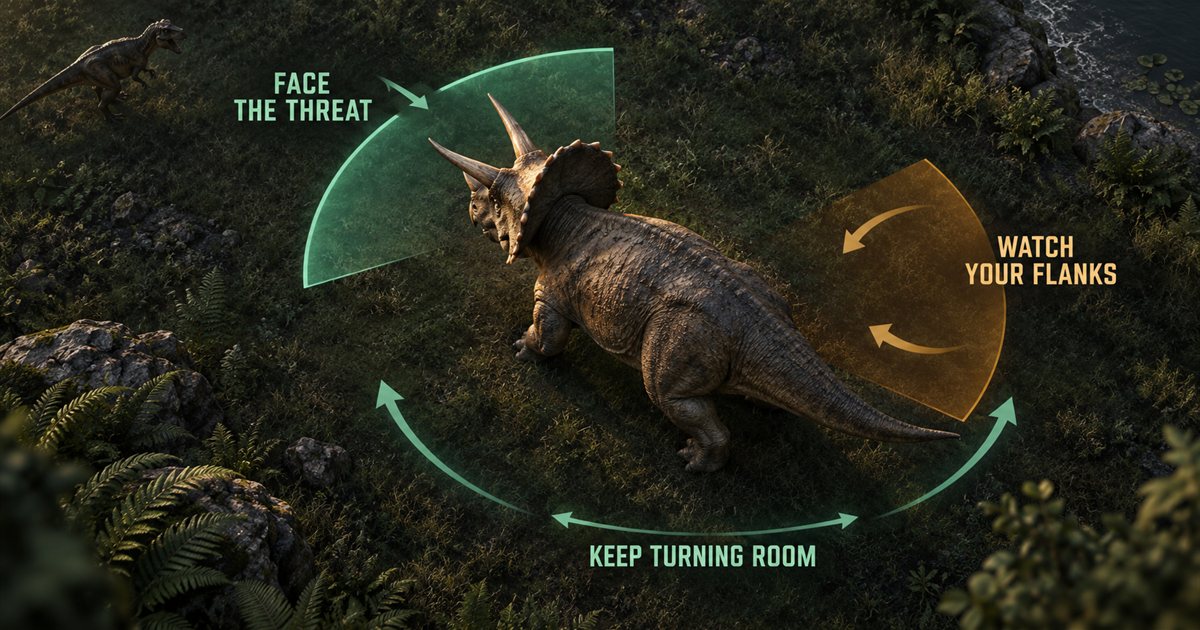
Trike defence: face the threat without losing turning room
A useful positioning habit is to keep the threat visible and avoid letting terrain decide where you must face. If a tree, rock or bank stops you from turning comfortably, your next response may be much harder to make.
Watch more than the animal directly in front of you. Another attacker may approach from the side while your attention is fixed on the first. When travelling with friends, communicate who is watching which direction instead of assuming everyone sees the same threat.
Open space gives you options; it is not a guarantee of safety. Before choosing to stand your ground, look at the available room, your condition and where companions could move. Avoid pinning a juvenile between your own body and an obstacle while trying to protect it.
For example, food beside a narrow rocky passage may be convenient, but defending that exact spot could make turning difficult. Compare it with a nearby area that leaves several approaches visible. You still need to assess danger, but you have fewer terrain constraints to manage.
Triceratops diet: plan from the live food panel
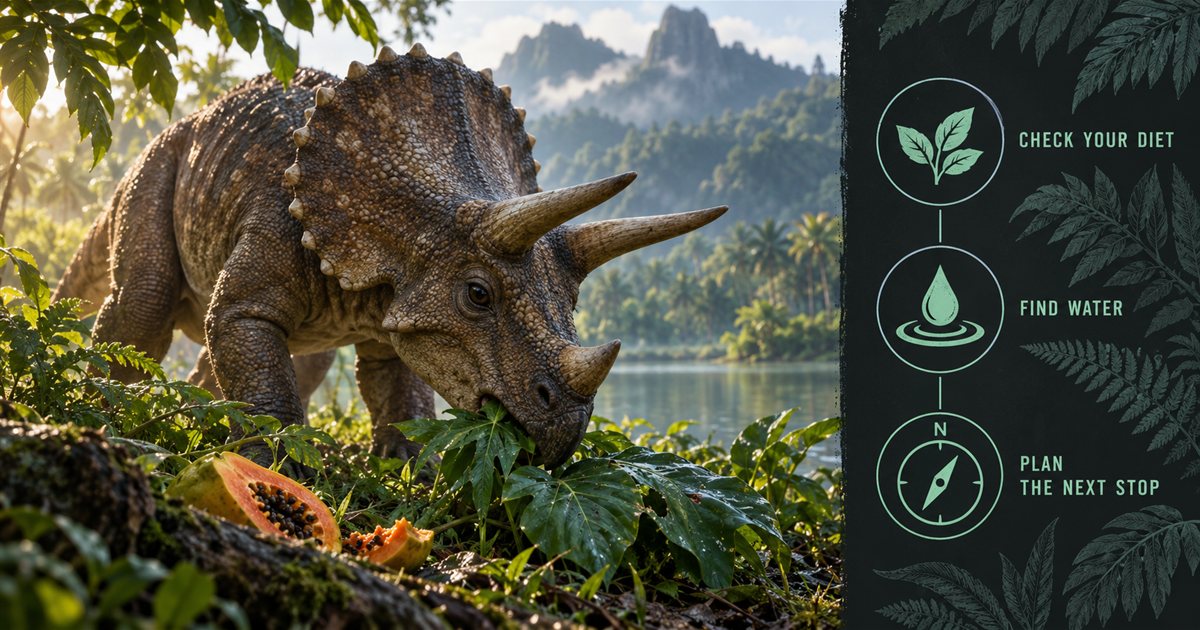
Read the preferred foods in your current Status Report before choosing a destination. Identify the nutrient you need, then compare that need with your water and travel resources. Filling hunger alone does not necessarily complete the diet balance you wanted.
Do not travel across Gateway just because an old video named one plant. The live panel and current resource clues should guide the decision. This guide deliberately avoids a fixed preferred-food table or a growth timer that could become misleading after a patch.
Inspect the result after feeding. If a nutrient remains low, plan the next stop from what the bars actually show. Our food and diet guide explains the broader system, while the migration, patrol and sanctuary guide helps distinguish those resource references.
Before settling at a food source, observe the approaches. Other players may also be heading there. Feeding without checking the surroundings can put you into a fight with a poor starting position, even when the food itself was exactly what you needed.
Growing a juvenile Triceratops
Start with a short, understandable resource loop. Refresh your location, identify a realistic food direction and check a water approach before thirst becomes urgent. Learn one return landmark rather than continually changing destinations.
A juvenile should not be asked to follow every adult route. Compare the actual terrain, remaining resources and pace of the slowest member before setting off. If the herd is already far ahead, repeatedly sprinting after it can leave the juvenile with fewer choices when it finally arrives.
When friends are helping, agree where to stop and what to do if someone becomes separated. A known meeting point is easier to use than a moving target that changes direction without warning. Recheck the player's current position before travelling toward an old marker.
For progression beyond the opening, read the growth guide and prime, elder and entombing guide. Neither a herd nor a route marker removes the need to manage your own animal.
Herd travel on Gateway: agree on the next stop
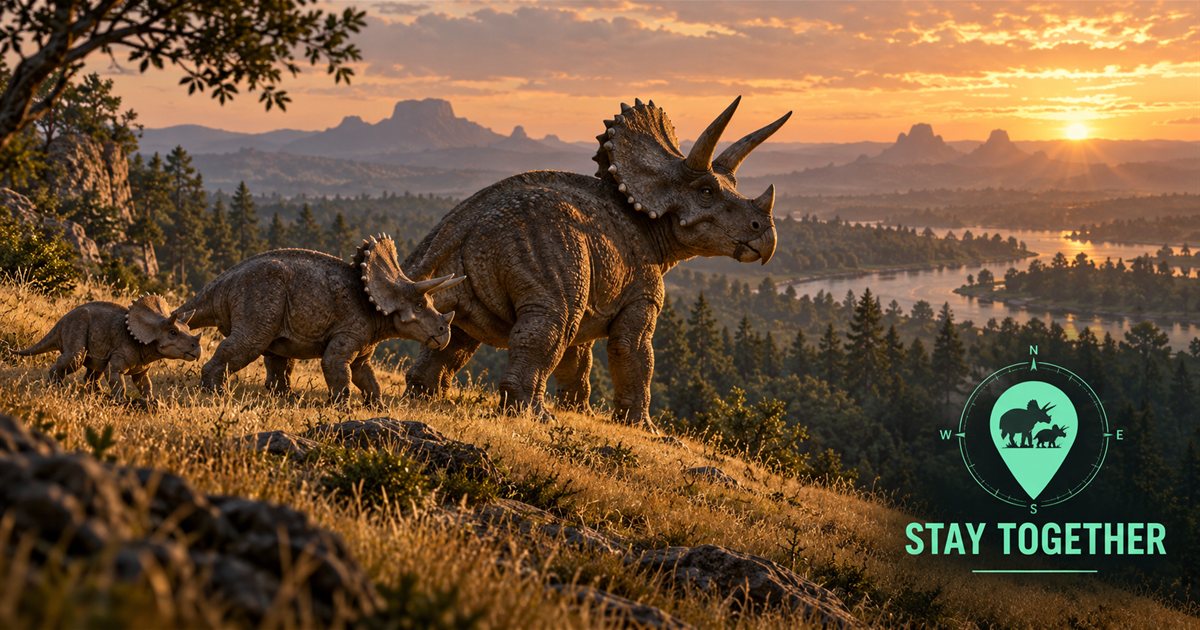
Choose a destination everyone can reach before the group starts moving. Explain whether the next priority is food, water or recovery. That makes it easier to decide whether a detour is worthwhile instead of following the first player who changes course.
Leave turning space around each animal and avoid bunching up at a narrow approach. A compact cluster can make movement and visibility harder, especially when someone is smaller or trying to leave an encounter. Staying together should mean coordinated decisions, not standing in exactly the same spot.
Plan water with particular care. A quiet river surface is not proof that no predator is present. Approach deliberately, keep a departure direction available and do not assume an adult's presence makes every drink safe. Read the Gateway water guide for more context.
After a stressful encounter, check everyone's immediate needs before moving again. One player may need recovery while another needs water. Choosing a sensible shared next step is more useful than continuing a long journey simply because it was the original plan.
Using TheIsleMinimap with Triceratops
Enable location names and relevant resource references in map layers. Use your own marker to understand direction, then compare the route with the ground ahead. The app does not calculate a safe path through cliffs, predators or narrow terrain.
Copy Asset Location in-game, or use the enabled screen reader with your approved reading area while Lat and Long are visible. Your marker shows the latest accepted reading, not continuous movement when coordinates are hidden. The coordinate guide explains how to keep it current.
Squad plans include private app squads for up to four players; Solo Lifetime is the solo option. App squads are separate from The Isle's in-game group limits and server rules. Follow those rules on official and community servers.
Triceratops questions
Is Triceratops in EVRIMA?
Yes. Patch 0.20.109 added it to public EVRIMA. Check the current character-selection screen and server settings when starting a run.
How do you activate Trike thrash?
The released ceratopsian reference uses double-tapped LMB. Check your own bindings and distinguish it from a held input.
Can Triceratops always defeat T-Rex?
No guide can guarantee that matchup. Compare the T-Rex guide for its attack options, then assess the actual animals, positioning and terrain.
Can I use the minimap to find safe food?
It provides location references and accepted player positions, not live enemy detection or a safety guarantee. Check the surroundings and current resource state in The Isle.